Effects: In traditional Austrian medicine the fruits have been administrated internally as jelly or syrup for treatment of disorders of the gastrointestinal tract, kidneys and urinary tract, and fever.
Use: : In folk medicine, V. vitis-idaea has been used as an apéritif, astringent,antihemorrhagic, anti-debilitive, depurative, antiseptic (especially for the urethra), a diuretic, a tonic for the nervous system, and in various ways to treat cancer, diabetes, rheumatism, and various urogenital conditions.
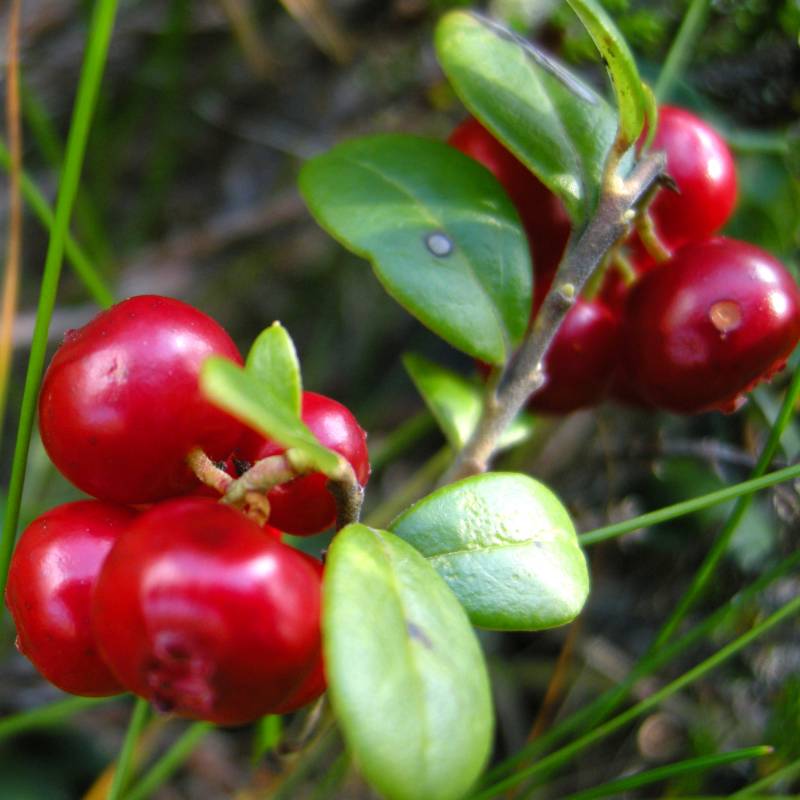
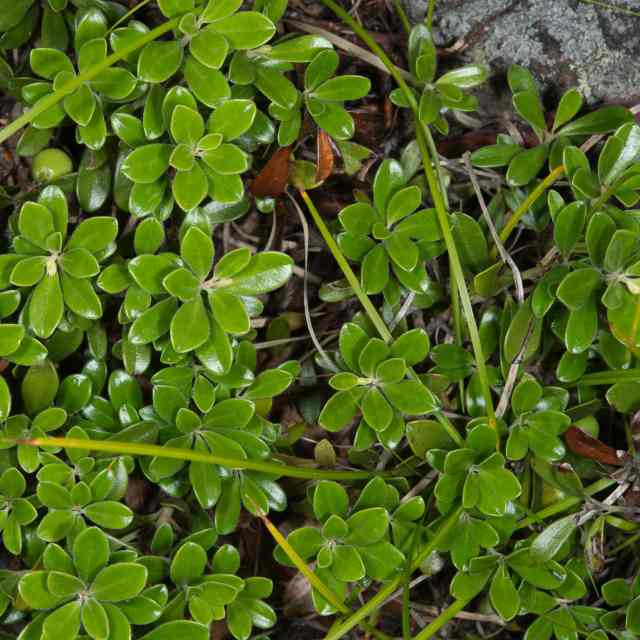
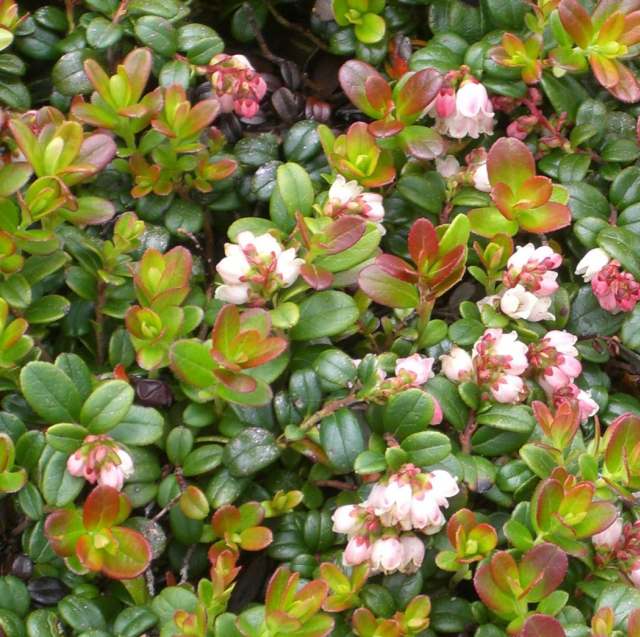
Background information: Vaccinium vitis-idaea is called cowberry in the United States, United Kingdom and Ireland and lingonberry in North America. The name cowberry is derived from the scientific name Vaccinium, which comes from vaccinus, an adjective from Latin vacca “cow”. Vaccinium vitis-idaea spreads by underground stems to form dense clonal colonies. Slender and brittle roots grow from the underground stems. The stems are rounded in cross-section and grow from 10 to 40 cm (4 to 16 in) in height. Leaves grow alternately and are oval, 5–30 mm (0.2–1.2 in) long, with a slightly wavy margin, and sometimes with a notched tip. The flowers are bell-shaped, white to pale pink, 3–8 mm (0.1–0.3 in) long, and produced in the early summer. The fruit is a red berry 6–10 mm (0.2–0.4 in) across, with an acidic taste, ripening in late summer to autumn.
[wpspoiler name=”Where to find it”]Ireland: Vaccinium vitis-idaea keeps its leaves all winter even in the coldest years, unusual for a broad-leaved plant, though in its natural habitat it is usually protected from severe cold by snow cover. It is extremely hardy, tolerating as low as -40 °C (-40 °F) or lower, but grows poorly where summers are hot. It prefers some shade (as from a forest canopy) and constantly moist, acidic soil. Nutrient-poor soils are tolerated but not alkaline soils.
Greece: N/A
Germany: The fox berry can be found in the northern hemisphere. It grows on sour, base-poor soil including sandy and rocky grounds and marshland.
Poland: In Poland it is common both in the lowlands and in the mountains. In some areas, known as gogodze in dialect .
Italy:…..[/wpspoiler]
[wpspoiler name=” Cultural aspects(stories/songs)”]Ireland: N/A
Greece: N/A
Germany: There is a folk tale in the saxonian ore mountains in which the foxberry (German Preiselbeere) is named after Sebastian Preisler who built the first houses of Ober- and Unterjugel (near Johanngeorgenstadt) in 1571 and introduced the fox-berry into trade as well as he made it a common food. At least it is said so.
Poland: N/A
Italy: …..[/wpspoiler]
[wpspoiler name=”Contemporary use(cuisine/ cosmetics/medicine)”]Ireland: In folk medicine, V. vitis-idaea has been used as an apéritif, astringent, antihemorrhagic, anti-debilitive, depurative, disinfectant/antiseptic (especially for the urethra), a diuretic, a tonic for the nervous system, and in various ways to treat breast cancer, diabetes mellitus, rheumatism, and various urogenital conditions.
Greece: N/A
Germany: The leaves of the fox berry are mainly used against urinary tract infections including pyelonephritis and cystitis but the plant also has a prophylactic aspect preventing bacteria from growing in the mucous membrane of kidney and bladder. Another possible use is to prepare tea from fox berry leaves against rheumatism and gout. As regards the use as food, the berries can be used to make jam, juice and compote or can be eaten right away. Dried berries should taste much better than fresh ones. The fox berry is a very popular garnish for venison dishes and “Wiener Schnitzel“.
Poland: Lingonberry is commonly used in the English cuisine, primarily as an element which I give the game. In the case of Polish cuisine, also used similar methods, but performs a completely different cranberry jelly, though – to be precise – you have to add that it is also used to play with different typical games.
Italy: ……[/wpspoiler]
[wpspoiler name=”Traditional use (remedies, uses)”]Ireland: The berries contain plentiful organic acids, vitamin C, provitamin A (as beta carotene), B vitamins (B1, B2, B3), and the elements potassium, calcium, magnesium, and phosphorus. In addition to these nutrients, they also contain phytochemicals that are thought to counteract urinary-tract infections, and the seeds are rich in omega-3 fatty acids.
Greece: N/A
Germany: Traditionally the plant was used to treat urinary bladder disease.
Poland: In addition to the use of kitchen, lingonberry is commonly used in herbal medicine. Blueberries are known as dietary agent. This is because that greatly improve digestion, but we the one who thinks it's all positive use blueberries. It is also used for other reasons. Demonstrate, inter alia, astringent, diuretic, antidiarrheal and antiseptic, so use blueberries is really a lot. In addition to these, you might want to add something else – the blueberry fruit infusions are excellent for the treatment of kidney stones.
Italy: …….[/wpspoiler]